
Clutch Slipping or High Engagement: Repair in Salt Lake City, UT
Scott's Auto & Clutch Repair has specialized in clutch diagnosis and repair in Salt Lake City since 1990.
Understanding Clutch Slipping or High Engagement
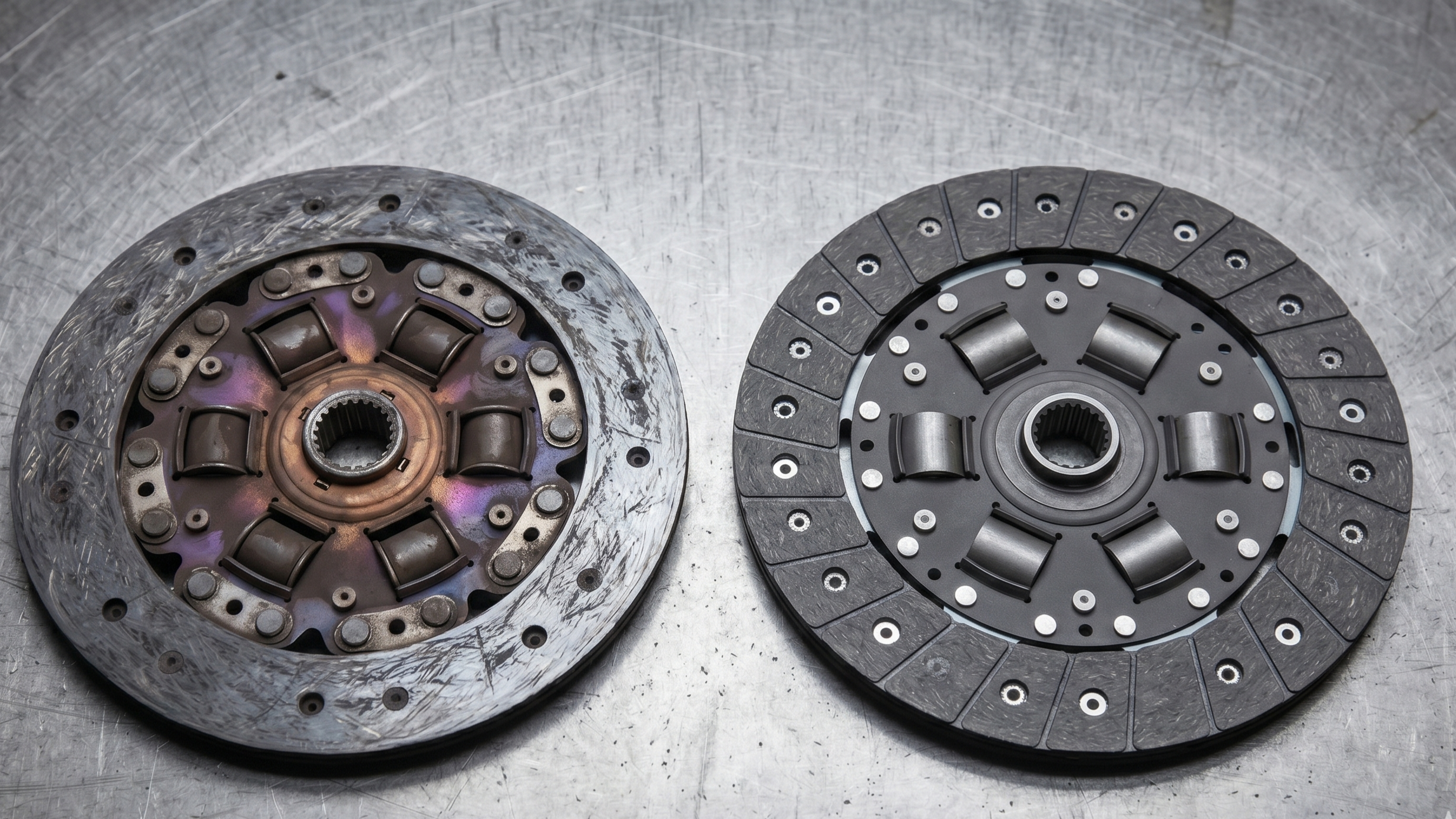
Clutch slipping is when your engine revs climb but your speed doesn't, power isn't reaching the wheels. One of the most common reasons is a worn clutch disc. You can see in the image below that the disc on the left is worn down and can no longer grip, compared to the disc on the right which is brand new. There are several other reasons a clutch can slip, which we cover in the causes section below.
Is My Clutch Slipping?
The main feeling is a disconnect between engine effort and vehicle response, you push the accelerator harder and the engine revs climb, but the car doesn't speed up to match. It's most obvious on hills and freeway onramps where you'd expect both to rise together.
You may also notice the clutch pedal engaging very high in its travel, near the top rather than mid-stroke. A burning smell during or after a steep hill is another sign, that's friction material overheating. If both are happening, the clutch is almost certainly slipping.
What Causes Clutch Slipping or High Engagement?
These are possible causes to inspect. Tell us which symptoms you notice; the checks below help guide diagnosis but do not confirm a failed part on their own.
Worn Clutch Disc
The clutch disc is a wear part, like brake pads. Each engagement and disengagement sacrifices a small amount of friction material, and over enough cycles the disc thins past its service spec. Once it's worn through, it can't generate the friction needed to transfer full engine power to the wheels.
RPMs climb sharply on freeway onramps or hills while speed lags behind. Usually appears between 60,000 and 120,000 miles, less if you drive in the canyons or tow regularly.
Oil Contamination
Oil ruins clutch friction. When the rear main seal at the back of the engine or the transmission input shaft seal starts leaking, oil drips onto the clutch disc and soaks into the friction material. Even a small amount makes the disc slip under load. The clutch may have plenty of life left mechanically, but it can't grip an oil-soaked surface.
Slipping appears suddenly rather than gradually, sometimes without high mileage on the clutch. Look for oil drips on the driveway near the bell housing, between the engine and transmission.
Weak Pressure Plate Springs
The pressure plate uses heavy springs to clamp the clutch disc against the flywheel. Over years and tens of thousands of cycles, those springs lose their tension. The disc may still be in good shape, but the pressure plate isn't squeezing it hard enough to transmit full power, so the clutch slips when you put real load on it.
Slip shows up under heavy load like towing, steep grades, or hard acceleration, but not during light city driving. Often paired with a clutch pedal that engages near the floor instead of mid-pedal.
Worn or Damaged Flywheel
The flywheel is the hardened steel surface the clutch disc grips against. Extended slipping generates heat that glazes, scores, or warps that surface. Once damaged, the flywheel can't make proper contact with even a brand-new clutch disc, and the new clutch will slip on the same surface within a few thousand miles.
Slipping that returns within months of a recent clutch replacement. The new disc was put on a damaged flywheel surface. Often paired with clutch chatter or shudder on engagement.
Incorrect Clutch Adjustment
For the clutch to engage fully, the pedal needs the right free play and travel. If a cable has stretched or a hydraulic system was set up incorrectly after recent work, the pressure plate may not fully clamp even with the pedal completely released. The disc spins under partial pressure and slips continuously, even on a clutch that's not actually worn.
Common after recent clutch work, a cable replacement, or master cylinder service. Slipping is consistent across all conditions rather than only under load. The clutch can never fully clamp.
Aggressive Driving Habits
Clutches wear in proportion to the heat they generate. Hard launches, slipping the clutch on hills, riding the pedal in traffic, and towing all add up. A clutch that lasts 100,000 miles for one driver may only last 50,000 for another making the same commute, just based on technique. Utah's grades amplify the difference.
If your daily route includes Wasatch canyons, steep onramps, or frequent towing, your clutch is wearing two to three times faster than a flat-city driver's. Slip often appears at lower mileage than the original equipment would suggest.
Not sure which applies to you? Call (801) 485-4089 or text us: free diagnosis at our Salt Lake City shop.
When Should You Bring Your Car In for Clutch Slipping Repair?
Clutch slip is self-reinforcing. Each slip event glazes the disc and flywheel face, which reduces grip and triggers more slipping. What starts on freeway onramps can spread to moderate throttle and lower gears within weeks, especially on Utah's mountain grades through Parley's Canyon and Cottonwood.
The cost difference is the flywheel. A disc-and-pressure-plate kit is the complete repair when the flywheel is still smooth. Once the flywheel is glazed from extended slipping, the new disc will slip again within months. Catch it early.
Who to Trust for Clutch Slipping Repair in Salt Lake City
Before we drop the transmission, we check the hydraulic system and inspect for oil leaks at the rear main and input shaft seals, contamination from a leaking seal can destroy a new clutch within months. Once we have access, we measure flywheel runout and inspect the surface for glazing and heat checks. You see the parts before the cost conversation. See our full clutch repair service page for what's included.
Scott's Auto & Clutch Repair has been doing this in South Salt Lake since 1990. Clutches are one of our highest-volume jobs, we know which platforms have weak points, which aftermarket kits come back, and how to spot the contamination patterns that cause repeat failures.
Free diagnosis. Written estimate before any work begins. No surprises.
Where to Get Help with Clutch Slipping or High Engagement
Scott's Auto & Clutch Repair, serving Salt Lake City drivers since 1990.
Hours
Mon-Fri: 9:00 AM - 5:30 PM
Phone
Frequently Asked Questions: Clutch Slipping or High Engagement
How much does clutch replacement cost?
Clutch replacement typically runs $800–$1,800 depending on your vehicle. If the flywheel needs resurfacing or replacement, add $200–$400. Diagnosis is free, and you get a written estimate before any work begins.
How long does a new clutch last?
A properly installed clutch lasts 60,000 to 100,000 miles under normal driving. Utah's mountain grades and stop-and-go traffic shorten that, so drivers commuting through the canyons or up onto the benches often see 50,000 to 70,000 miles. Towing and frequent hard launches shorten clutch life further.
Should I replace the flywheel when I replace the clutch?
Only if it needs it. We measure flywheel runout and check the surface for glazing or heat damage. If it's within spec, the clutch kit alone is the complete repair. If it's damaged from extended slipping, installing a new disc on it leads to repeat slipping within a few months.
Can I make my clutch last longer?
Yes. Avoid riding the clutch in traffic or on hills, since partial engagement generates heat that wears the disc faster. Hold the car on a grade with the brake, not the clutch. Shift to second earlier on steep onramps to reduce peak load on the disc. These habits add tens of thousands of miles to clutch life.
Not Sure This Is Your Issue?
Browse related symptoms, drivers often confuse these for one another.
Customer Reviews
What Our Customers Say
Real reviews from Salt Lake Valley drivers
“So glad we found Scott's auto. Great, honest mechanic!”
“A good mechanic shop — honest and gets the job done.”
“This guy is the best! Not only did he get my car done the same day, but when I couldn't pull it all the way there he came and pulled it with his own truck and son. Then he even charged my air conditioning! I'm a single mom with no one to really help with car stuff. This means the world to me. Couldn't ask for better help!! Thank you so much you saved the day and more!!! And honest to boot.”
“Took my grandson's car in to have the clutch looked at. We thought it might need a new clutch. Scott explained the level of wear and thought it was premature to replace it. He could have just said it needed a new clutch and I wouldn't have blinked an eye. I appreciated the honesty. Only needed a clutch adjustment. I also had him wire up a new set of fog lights and they look and work great. He will definitely get our business in the future.”
Experiencing Clutch Slipping?
Contact Scott's Auto & Clutch Repair today for a free diagnosis. We'll get your vehicle running right.
- Free Estimates
- Competitive Pricing
- Same or Next Day Service
- 2-Year Parts & Labor Warranty
- Free Towing on Repairs Over $1,000
144 W Crystal Ave, South Salt Lake, UT 84115